

HD SDI to RF modulator might be a technical term, but it is essential in video distribution. It bridges professional video signals transmitted and received on HD SDI and the more accessible RF coaxial networks that continue to be used in hotel rooms, hospitals, stadiums, and campuses. You do not need to rewire all your rooms with HDMI or IP, but you can use the coax cable in place to bring crystal-clear video.
On deployment of an HD SDI to RF modulator, you allow broadcast-quality video to travel over pre-existing infrastructure. The equipment translates the signal and modulates it, and it is sent as an RF signal that can be displayed on a television. This renders it a good and economical solution.
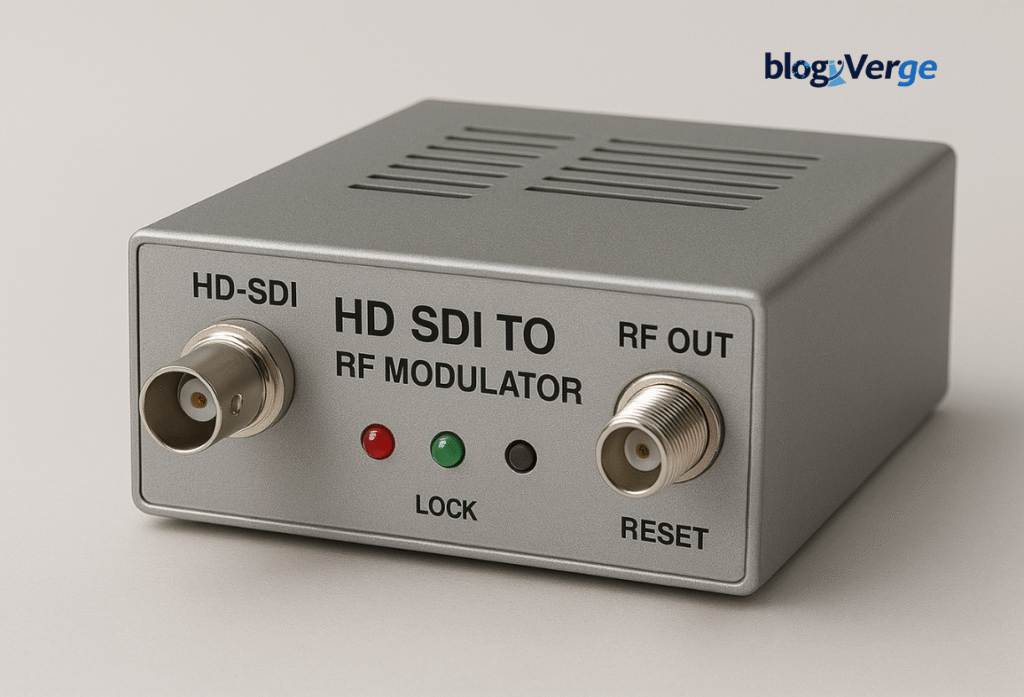
Table of Contents
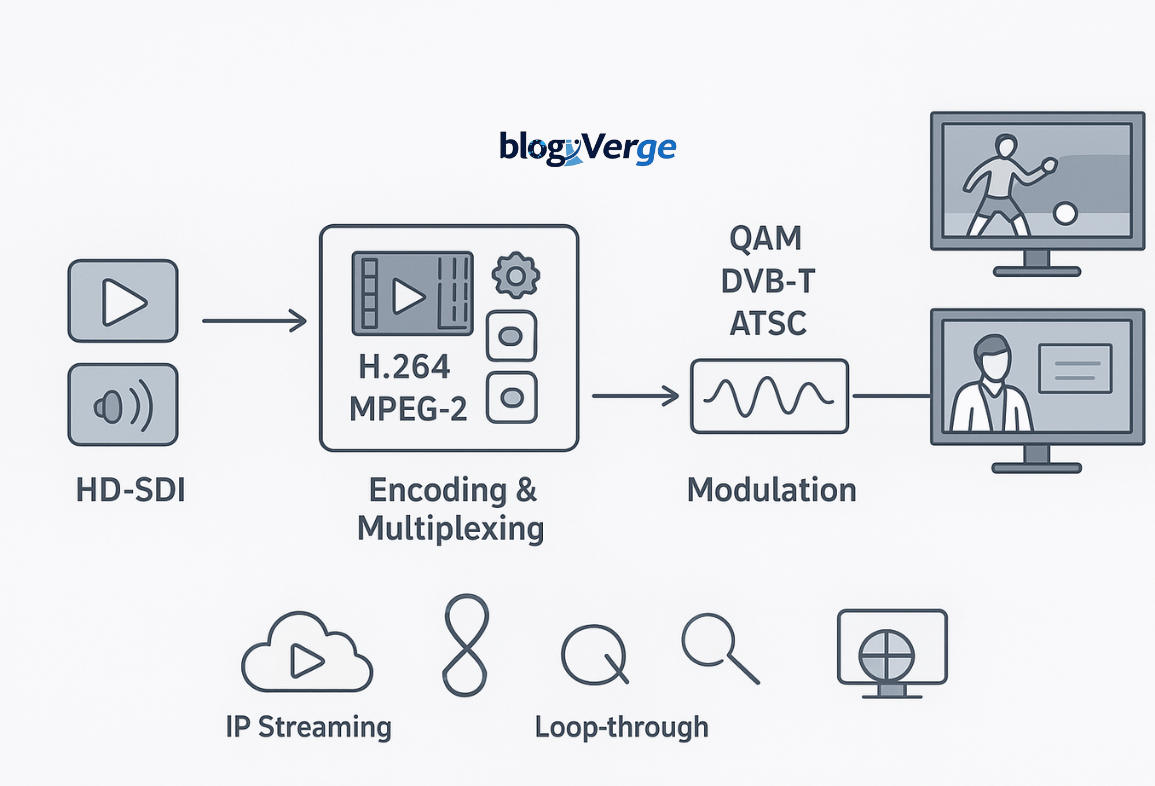
How an HD SDI to RF Modulator Works
Input (HD SDI / 3G SDI)
HD SDI is a broadcasting interface. It has coaxial digital video and embedded audio using BNC connectors. Numerous modulators can help in supporting HD-SDI as well as 3G-SDI and support higher frame rates.
Encoding & Multiplexing
The signal is coded in the modulator, which is frequently H.264 or MPEG-2. Multiple inputs can be added to some of the units, and they can be merged into one transport stream.
Modulation & RF Output
The coded stream is inserted on a particular RF carrier frequency. This may be either QAM, DVB-T, or ATSC, depending on your region. This is then fed to coax networks to be received by TVs.
Extra Features
High-end models also feature IP streaming, loop-through outputs, and management through web or SNMP interfaces.
Key Specs & Selection Criteria
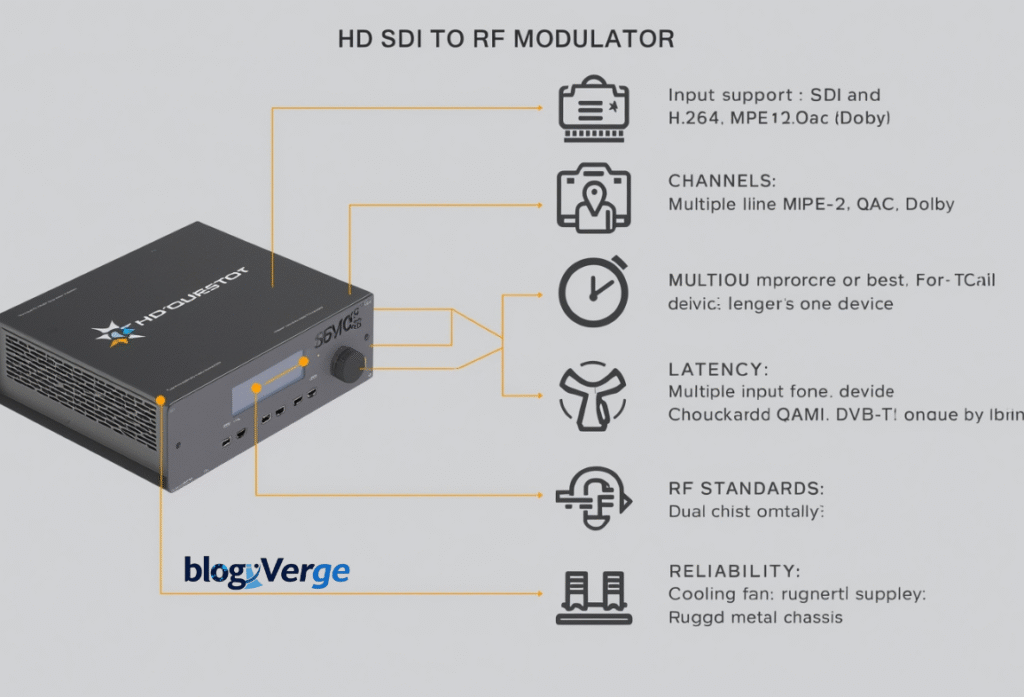
Input Support/ Compatibility.
Choose a modulator that has HD-SDI and HDMI support to provide flexibility.
Encoding Options
Find support for H.264 and MPEG-2, and audio models like AAC or Dolby, and adjustable bitrates.
Channels & Density
Others process one channel at a time, but some can modulate several SDI sources at the same time.
Latency
In the case of live events, choose a low-latency model to ensure that delay is not apparent.
RF Standards
Find out what RF standard your unit is compatible with in your region.
Reliability
Like 24/7 running of the modulator, cooling systems, redundant power, and a sturdy build are necessary.
Real-World Applications
Hospitality
Existing coax is used to deliver in-house channels, live events, or security feed to rooms in the hotels. This is easily made by an HD SDI to RF modulator.
Stadiums and Arenas
Sports that are recorded live via the SDI cameras could be converted and transmitted in real time on the screens within the venue. This is essential because of low latency, hence fans do not suffer delays.
Corporate & Education
Organizations and educational institutions disseminate training or announcements throughout the campuses without the necessity to reestablish networks.
Broadcast Facilities
In headends, HD SDI to RF modulator have become part of the professional workflows.
Healthcare & Government
The modulators are used by hospitals and public institutions in internal TV systems, training, or even communication during emergencies.
Integration Tips
Cable Quality
Proper use of 75-ohm coaxial cable and a bad quality connector should be avoided.
Frequency Planning
Every channel should be assigned wisely so as not to interfere with the current RF broadcasts.
Output Levels
Adjust the signal level to be neither too small nor too high.
Monitoring
Turn on recording and alarms when possible.
Redundancy
Backup supplies of modulators or power supplies should be used to install critical installations.
Updates
Constantly update the firmware, although it is important to always test updates first before using the updated version in production.
Conclusion
One sure method of incorporating the new HD video into an older coaxial distribution system is the HD SDI to RF modulator. It functions by transforming SDI into an RF channel, which allows standards such as QAM or DVB-T, and delivers video to any TV with a tuner. These devices are used to distribute video inexpensively across a hotel or a stadium, in a hospital or a corporate campus, with extensive rewiring not required.
With the help of the appropriate model, the optimal frequency choice, and following the best practices in integration, you will be able to count on the stable and high-quality delivery of videos over the next few years.
FAQs
Q1. What will an HD SDI to RF modulator do?
Ans: It is used in converting SDI video to an RF channel so that it can be distributed in a coaxial cable.
Q2. Can I connect HDMI sources?
Ans: Yes, most of the models can support HDMI and SDI.
Q3. Is there latency?
Ans: Yes, except that low-latency versions maintain delays that are very small.
Q4. Is it possible to use more than one modulator on a network?
Ans: Yes, by giving every unit its own frequency of the RF channel.
Q5. Is this still useful in 2025?
Ans: Absolutely. Coax networks are still popular, and modulators provide a viable means of delivering HD video without expensive upgrades.
